CartBloom
Smart Shopify Cart Integration
- React
- Next.js
- Node.js
- Firebase
- Google Cloud
- Tailwind CSS
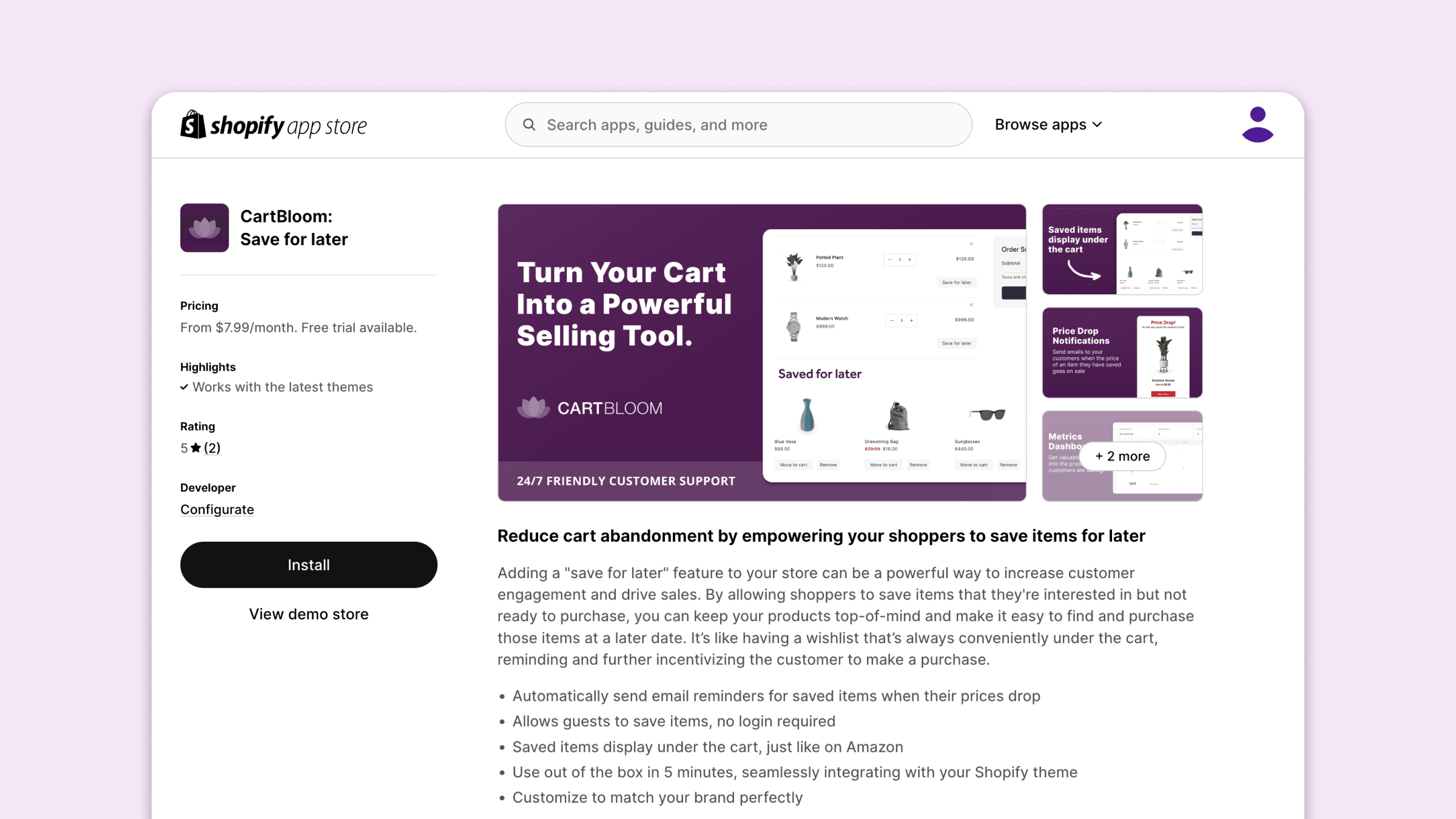
Overview
CartBloom transforms the standard Shopify cart from a static checkout step into a smart, conversion-focused experience. Standard carts often feel like dead ends, but CartBloom helps merchants capture revenue that usually slips through the cracks. By syncing cart data across devices and offering relevant add-ons, the app removes friction. It ensures that if a user switches from phone to desktop, their cart is waiting for them—turning a passive summary page into an active driver of sales.
Project Scope
The Problem
Many e-commerce stores bleed revenue due to "fragile" carts. If a shopper switches devices, closes a tab, or hits a generic checkout page, the purchase intent often evaporates. Standard carts rarely offer the persistence or personalization needed to close the sale.
The Solution
I built CartBloom to make the cart "sticky." The app synchronizes state in real-time across devices and injects smart product recommendations directly into the cart flow. This keeps users engaged and lowers the barrier to checkout.
My Role
I architected and built the application end-to-end. I handled the full-stack implementation, from the Next.js UI design to the real-time Firebase synchronization. I also managed the Shopify API integration to ensure seamless merchant onboarding and secure data handling.
Key Features
- Cross-Device Continuity: Shoppers can add items on their phone and complete the purchase on their desktop without creating an account.
- Native Branding: The cart inherits the merchant's existing design system, looking like a core part of the store rather than a third-party plugin.
- Contextual Recommendations: Upsells appear based on cart contents at the moment of highest intent, increasing average order value without being intrusive.
- Mobile-First Architecture: The layout is optimized for touch targets and smaller screens to reduce mobile abandonment rates.
Tech Stack
I chose a stack that balances immediate performance with long-term scalability.
- Frontend (React & Next.js): I needed a fast, component-driven UI that could handle complex state management. Tailwind CSS allowed me to build a styling system that adapts to different merchant themes rapidly.
- Backend (Node.js & Firebase): Node.js handles the Shopify integration logic, while Firebase/Firestore manages the real-time data sync. This combination ensures users see instant updates across devices.
- Infrastructure (Google Cloud Platform): I deployed serverless Google Cloud Functions to handle the workload. This architecture ensures the app can handle traffic spikes (like Black Friday) without the overhead of maintaining dedicated servers.
Technical Highlights
- Real-time Synchronization: Implemented Firestore listeners to push live cart updates. If a user adds an item on one device, it appears instantly on their other active sessions.
- Serverless Scalability: Leveraged event-driven architecture on GCP to ensure predictable performance regardless of store traffic volume.
- Component Composition: Used the React Context API to manage global cart state, ensuring consistent behavior across the slide-out cart, page cart, and checkout flow.
- Shopify Integration: Built a seamless OAuth flow for merchant installation, ensuring the app feels like a natural extension of the Shopify admin panel.